Category: Happiness

  • Mindful of the Game #3

    If those closest to you cannot adequately consider your needs, or at the very least make allowances for them, what is at the root of this?

    By asking the important question of how this makes us feel, we can begin to understand. If others are unable – or just indifferent – to your needs, how does this make you feel? Lonely? Frustrated? Angry? Perhaps all of these emotions occur just on different occasions. From my own perspective, it comes down to the level of my awareness. It all depends on how mindful I choose to be about others’ behaviour. When fully aware, I predominantly feel angry when my needs are disregarded.

    And here is the answer: My anger. Others need this if they’re unable to express this themselves. The purpose, or root to the game, of disregarding my needs, is no more complicated than this. In my particular circumstances, once I ask the right questions, I’m able to remind myself of the limitations of those around me. The game of ignoring my needs is being played in order to use my emotions as a tool. This tool can then be used for varying things. Rejection can be an aspect to this.

    So, to recap. If others are being inconsiderate to your needs, ask yourself how this makes you feel. Now. Why would others need you to feel this way? To help you? Or as a means of using your emotions to reach a goal of their own?

    The key to a more comfortable life and to finding considerate, loving people within it is mindfulness. Become aware of the game. If you remain unaware of how others may be subtly manipulating you or even bullying you, the game is over before you’ve even begun. Without awareness, you’re stuck in a game being played around you that you’re losing. Be mindful and begin to play with a far better hand.

  • Mindful of the Truth

    In this reality, he sat next to the bed of the dying child and told her all about heaven. In an alternate reality, he told her this . . .

    We all die. Some die sooner than others. It is nature or circumstances that decide this. And it’s true that you will never see me again but that’s okay. Okay, because of what I’m about to tell you.

    There are many different elements that have made you who you are. Those elements, or parts, were already here before you were born. When you die, your body returns to the earth. All that you are is recycled and used again. You become the grass, the trees, and the blue sky. You, my love, will go everywhere. You will be in everything and that everything will be here for as long as there is a universe. And how long will the universe live? Longer than our minds can conceive of.

    Which reality we live in is, of course, a choice. If we chose a reality based on fantasy, what is this life? Is our life something vague and filled with conflict and denial? Are we wrapping ourselves in cotton wool created by lies? Facing the truth means experiencing the stark realities of life. And those realities, although sharp and focused, are the truth of a beautiful life

    When we have the courage to face our suffering and talk to our children with truths, only then will we live in a world that knows how to escape the madness. Always be mindful of the truth, and that way, you will find truth in everything. Love. Loss. Joy. Sadness. Life. Everything becomes clear. Life and death are beautiful then.

  • Something from Nothing

    How can something come from nothing? What happened before time? What was there before the birth of the universe? Can something really come from nothing?

    I sense my addiction to stimulation on a constant basis. Indeed there was a time when my need for stimulation was at the extreme end of the scale. I needed chaos. I needed mania. There had to be something going on constantly. And if not I would find a way to create the chaos I craved. Drama. Oh yes please.

    Imagine coming to the understanding that the thing you prided yourself on (thinking) has actually been the cause of your troubles.

    I used to spend a lot of time in my head. Loneliness will cause this. Thinking, judging, ruminating, puzzling, questioning on and on and on. Constant chatter and deliberation. Chaos in my head and chaos in my life. So here is the solution . . . nothing.

    In my current role I spend a lot of time doing nothing. There are periods of time when I don’t see a customer for days. This can be excruciating for someone who needs stimulation.

    There is a need to keep the mind occupied if you’re addicted to stimulation. This can take the form of thinking or perhaps reading or watching something. Anything to take the mind out of the present moment. Because in the present moment there is nothing happening. And for me, purely because of my addiction, this nothing can be very tricky to deal with. There is even the possibility I’ll look to fill this nothing with eating! Again my addiction to sugar kicks in. Can you gain a sense of my dilemma?

    A dilemma until I find myself able to cope with nothingness in the present moment. And then something does come from nothing . . . calm control over my mind and my beautiful life.

    Learn to improve mindfulness from the gentle art of meditation

  • Look Deeply Into Your Feelings and Be Free!

    No matter in what way you feel that you’re suffering, stop, experience the feeling, and look deeply into it

    Vast numbers of us deal with our pain and suffering through the coping mechanisms we’ve learnt. Without having learnt how to moderate our attachments to things and people we will of course suffer when they’re taken away. The ideal is to remain mindful of the type of love we exhibit to those around us and stay mindful of our attachments to impermeant things. Love, that’s based on ownership and desire, will cause great suffering to all, whereas love, that involves the need to empower those around us, and is built on understanding and compassion, will create a lot of joy and freedom.

    When we continue to deal with our pain and suffering through coping mechanisms, we’re never fully free, we’re simply coping

    It’s the process of stopping that we must acknowledge. In the past, when we’ve wanted to change a feeling, or try and distance ourselves from it, this is when the coping mechanisms have instantly kicked in. Instead, if we mindfully stop and notice the feelings, we’re then given the opportunity to look deeply at them and understand their root.

    Moving through our pain and suffering instantly frees us

    They say that suffering is a choice. And indeed it is when we know, and yet continue to ignore, that by exploring it and understanding its root we’d be free. Once we have this knowledge, and yet continue to use whatever means we have of coping, then we are in fact only choosing to put of our suffering. Its return is the choice we’re making.

    So stop, look, and listen. When we understand the root of our loneliness and then decide to love ourselves – through acknowledging the value of our feelings – we become free. Our feelings, whether happy, or sad and painful, must all be embraced. Until we do this, our wholeness remains illusive, and we continue to suffer. Think of a time when you’ve been fearful before a certain activity. Once you’ve moved beyond the fear all is well. It’s the same with our suffering. Move through it and be free!

  • Mindfulness of Beliefs

    Taking mindfulness up to the next level, we can use it to improve further aspects, of our lives

    Our beliefs influence our lives in ways that it can be quite staggering to comprehend. And we can gain sufficient understanding of beliefs, and how being mindful of them can improve our lives, in a relatively short period of time. There’s little need to go into a detailed study of beliefs, all we need do, is apply some simple understandings of them – and mindfulness – in order to make some powerful changes.

    Lets’s begin with a useful example of beliefs in relationships

    Think about growing up with a parent (or parents) who believed that relationships can be open. If you’re unsure of what I mean by ‘open’ please look up the exact meaning of this type of relationship here. On a personal level, I have very firm boundaries in respect of intimate relationships, and that’s how it works for me. Some might describe my view, or beliefs, as dated or restricted in some way, however, from my understanding, open relationships tend to create far more problems than they solve. Anyway, consider how things might be to a child growing up in such a household. A specific example I can share with you is, that of a child who sensed her mothers disappointment at her fathers promiscuity. This disappointment was emotionally transferred to the child who went on to believe that relationships where ‘disappointing’.

    Now, the point to be mindful of here is, the question of how such an individual went on to create disappointing relationships, as an adult. To help with this, we can ask ourselves the question: what would need to happen for me to find relationships disappointing? And I’m not talking specifically about intimate relationships here. The deep rooted belief that relationships are disappointing will spill over into all relationships. We must remember that the mind has a tendency to generalize when it come to beliefs. The mind will group all relationships together and find ways in which they are all a disappointment in one form or another.

    When asking yourself that earlier question, I wonder what answer came back to you? Perhaps disappointment in a relationship would be something as simple as poor timekeeping. In the case of the individual who grew up in a promiscuous household, she found relationships disappointing, when she couldn’t trust people to stay true to future arrangements. The way in which she did this, was to always make some small change to plans with friends, that would involve some uninvited element that would then cause her friends to feel disappointed. This would then cause her friends to make changes that then disappointed her. The end result being the fulfillment of her belief that relationships are disappointing.

    Take some time with that last paragraph, as understanding it fully, will prove very powerful.

    Until we’re mindful of how we find fulfillment of our beliefs, and take responsibility for this, we will continue running around in circles

    It’s useful to keep in mind how it is us that creates our own difficulties. It’s far too easy to blame some sort of external element. This is of course the point. The mind would prefer to hold on to its beliefs because to do this is an efficient use of energy. So pinning the blame somewhere, other than on ourselves, saves energy. Change takes effort. Changing beliefs takes a great deal of effort, and yet through being mindful, of how our beliefs can be influencing the flow of our lives, change begins to gently happen. A gentle flow is preferable and this is helped through mindfulness of our beliefs.
  • Mindfulness of Anger: A Constructive Force for Good

    I’ve built a beautiful fortress around myself and those I love. In search of the answer to their confusion, there are unthinking people who want to penetrate my defenses

    I cannot be an android disassociated from his feelings. As much as I might feel there is an advantage to this, I understand that if I deny my discomfort, pain, or suffering, I also deny happiness and pleasure. Anger arises in me when people behave in unthinking ways. Anger arises when people behave in ways towards me – and those I love – that might hurt them or bring them down. Inconsiderate, inappropriate, and damn right abusive treatment causes such rage. It is only mindfulness of my anger that saves me.

    Mindfulness of my anger enables me to control it and use its power in a constructive fashion

    When I feel my anger rising I take a breath and notice it. I then ask myself:

    What is causing my anger?

    What is at the root of my anger?

    What is my fear?

    Abusive and inconsiderate behaviour angers me because I’m fearful. Fearful that I, or someone I love, is being taken advantage of. These attempts are disrespectful. If someone is unable to show me, and those I love respect, then I don’t want those people in my life. Simple.

    The force of anger awards me the strength to rebuild my fortress. But only when I understand through finding the answers to my questions. The key to my freedom, strength, and the beauty of my fortress starts with mindfulness.

    For you, it may not be necessary, or even attractive, to analyse the how and why of peoples behaviour. All that’s necessary is the mindfulness of anger: a force to protect us

    Living in the real world means we must be aware of the dangers. We must be streetwise. The only way to protect oneself – in the real world – is awareness of the darker side of human nature. There are people who want to take advantage of you. On the way to the top of their illusions, they will attempt to use you as a stepping stone. There are also people who are simply unaware of how damaging their behaviour can be. Mindfulness helps to raise our awareness, ask the right questions of ourselves, and set appropriate boundaries.

  • What to Believe to Make the Change

    My curiosity constantly draws me into seeking to understand what drives people. I’m curious as to what it takes to make a person want to live well. Why should we search for peace? Why should we question our addictions? Why should we care?

    I feel the answer to these questions lies entirely in the level of compassion that’s been instilled in us from a very early age. Self-compassion, or compassion for the wellbeing of others, I believe is something that starts very early. It’s those parents who buy their child a rabbit, with the intention of helping that child build love and compassion for other beings, who raise a human that’s likely to care. The caring and taking responsibility for another being, from an early age, helps the child understand the two way nature of the relationship. Pleasure is awarded the child whose rabbit is healthy because they’ve taken proper care of it. Also, when the rabbit eventually dies, the child learns from their suffering. They learn that happiness and suffering go hand in hand.

    There must be sufficient reward for caring. There must always be something in it for us and we must never be ashamed to know and admit this. Our survival is paramount and we must be taught that when we make our survival the priority, we inadvertently lift everyone else

    Consider the late spiritual leader Thích Nhất Hạnh. Many have described his greatest achievement as the communities he created; the Sangha. We must ask what was his motivation? The first driver will have been his belief. His faith. He believed in Buddhism with every fiber of his being. He also believed he had the medicine to help people out of their suffering; that Buddhism had some of the solutions to humanities plight. The second driving will have been his compassion. He wanted all of us to better deal with our suffering, through living lives, that had more of an acceptance of how – according to Buddhist understandings – we generate our suffering. The third, and by no means last motivation, will have concerned the pleasure he received as a result of helping others prosper.

    The communities he created are currently hard at work looking to spread the word. They’re looking to spread the word of mindfulness and the importance of love and compassion in the world. It’s my understanding, that the current they will always be swimming against, is that of the conflicting beliefs our children are still being taught.

    We must understand that the rewards we receive concern the easing of our own suffering. The child must be taught to understand, how it’s the process of helping other beings prosper, that in turn creates their own prosperity

    It starts with: What do I want? Thích Nhất Hạnh saw the image of a Buddha as a child and decided: “That’s what I want to be” it started with what he wanted and the comfort that there will be some benefit to him. His compassion for other beings then drove him to want this for others too. His communities were his masterpiece and what piece of mind this must have offered him.

    If you want piece of mind, if you’ve finally had enough of our destructive patterns of living, ask yourself what you believe is the best way to live well. To give or to take? I would suggest neither. I would suggest that through reaching for the child within, who wanted the rabbit to thrive, we get closer to finding the truth. We are neither giving or taking, just simply being compassionately and mindfully there for another being, and in turn it will be there for us. Make your driving a deep desire to help others prosper and make the miracle happen.

  • All the things to Cultivate

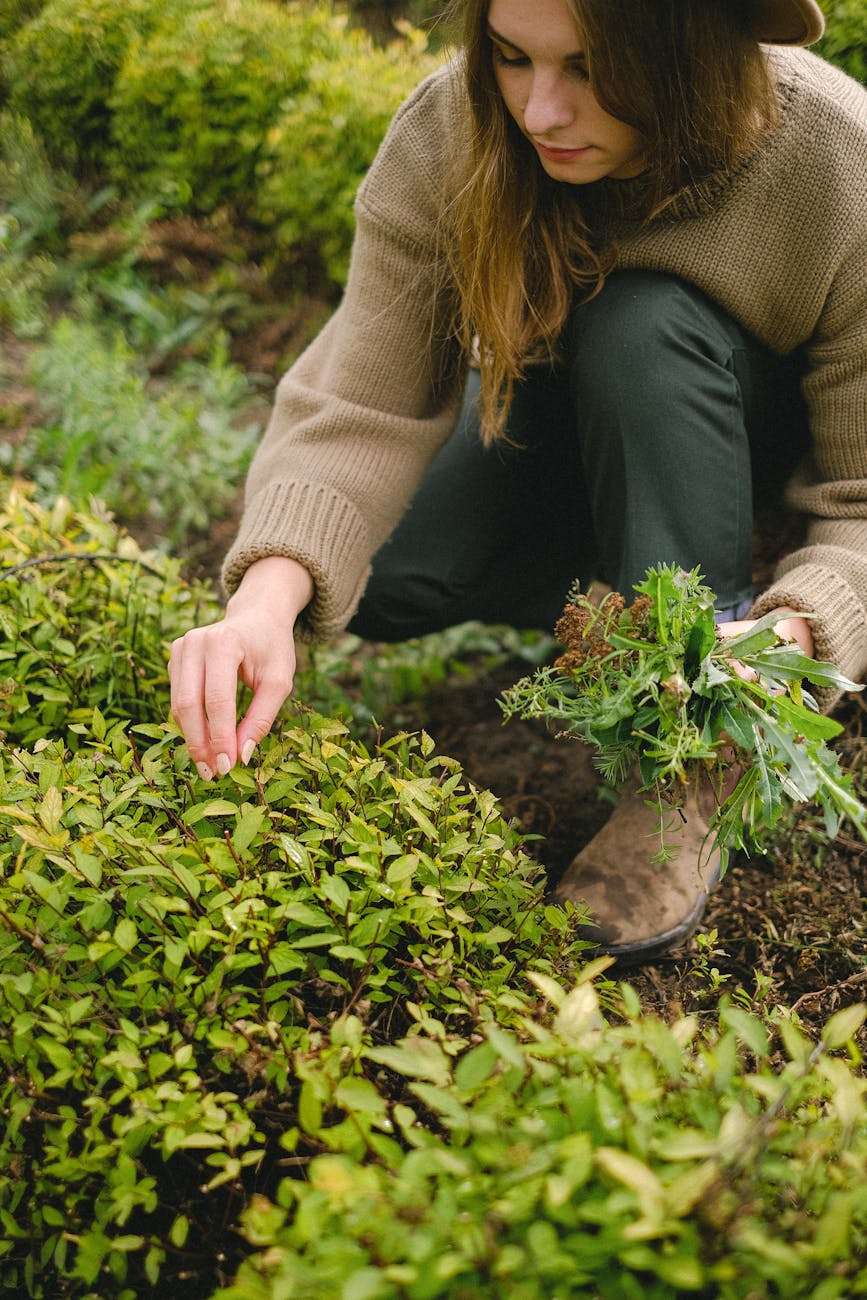
    Photo by Anna Shvets on Pexels.com

    Does the condition of being human make it hard to cultivate the following?

    • Love
    • Compassion
    • Generosity
    • Empathy
    • Kindness
    • Gentleness
    • Understanding
    • Acceptance

    What I find fascinating is, it’s the very condition of being human, that would have prevented me from seeking more of these things as a younger man.

    In fact, I wouldn’t have had a reason, to seek these things. The methods taught me to survive and cope with the madness were working. For so long, I’ve been wrapped up in the western world’s belief in what form happiness should take, and how to find it.

    Perhaps, now that you are reading this, you’re ready to cultivate the things that really matter in life. If not, there’s every chance it will be a while, before you come back here. Don’t leave it too long.

    The most powerful way of helping others to live with less pain and suffering is to be the very example of what we seek to cultivate

    If you’re ready to find more of these things, and would like to become a shinning example to others, this podcast is a good place to start. Be clear: there is no suggestion that we should all become Buddhist monks. No. The suggestion is that we begin to listen, and become further examples, of those who believe, not just in the power of love and compassion, but in all the things to cultivate.

  • More Love – A Healthy Requirement

    The ego wants to win because it’s being at the top that’s important. Wise men have told us to control our ego

    Control, through an awareness of the influence of ego, is essential if we’re to gain a true and lasting sense of happiness. The ego isn’t concerned with happiness but only with winning. And as we are often shown even the winners aren’t necessarily happy. The egotistical are often the most troubled of us all. And we mustn’t mistake the desires of the ego with the requirement for more love.

    When we have a clear understanding of what love achieves for us, and what the ego is seeking to achieve, we find our true sense of happiness

    I’ve often found myself confused as to what I’m looking for. I wonder: is this love or my ego? I’m cautious because I’m very aware of the dangers and limitations of my ego driven desires. A competitive nature is all well and good, yet the way to avoid the games and hurt our competitive nature can evoke is, to be able to separate love and ego.

    Love is the listener, love is the kind carer. Ego is the warlord and ego is the player

    So we must focus our attention on the healthy requirement of more love. What must we do to gain this? We must teach it. We must share it. And we must give freely of it. Love gives freely of itself, this is why it endures.

  • My Life Saving Medicine

    Of late I’ve come to recognise how very important my medication is and the importance of taking it daily

    If I want to calmly enjoy each day and be in command of my words and behaviour, I must remember to take my medication each day. My medicine helps me to remain aware of my nature and how fear and anxiety influence my behaviour.

    In addition to this, it helps me remain calmly aware of the nature of others and the dangers of allowing adult children (self-centred people) to manipulate me with their cute and naughty ways. I’ve always been a sucker for allowing children to get the better of me with their naughty, manipulative tricks.

    It’s important for us adults to be aware of the self-centred nature of adult children. After all, we’re not doing the child any favours if we’re failing to set firm boundaries

    And so, time and time again, we must remind ourselves to take our medication, as it’s the minds tendency to draw us back into old patterns of distraction and forgetfulness, as this is where it feels most comfortable.

    My habit has been to sleepwalk through life. Sleepwalking in respect of my lack of awareness of the self-centred. The self-centred have no concern for your well-being whatsoever. Their only concern is for themselves. It could be argued that this is the truth of human nature.

    However, I would suggest that once we’re grown, we have a greater capacity to genuinely concern ourselves with the needs of others. My medicine helps me with this. Sometimes, the search for adults is lengthy.

    You might now ask: What is this wonderful, life saving, medicine?

    Well, of course, I’m talking about meditation leading to improved mindfulness. In terms of all the above and more, there’s no doubt in my mind that this is the tool that’s making the difference. I can no longer sleepwalk through life with a lack of awareness.

    It was this lack that always left me feeling confused, unstable, and downtrodden. My daily dose of meditation continues to help me separate those that have any level of consideration for my needs and wellbeing (adults) from the gameplaying manipulative children (adult-children).

    You can raise your awareness, too. It’s the simplest solution there is, and I find the real adults have a far better grip on reality. A better grip on what really matters. And those that only have self-centred concerns tend to be the most destructive.