Practising Mindfulness Latest Posts

Contact: Philip@practisingmindfulness.co.uk

  • Here and Gone

    Death can be such a shock. It can be hard to accept that a person is no longer here

    This is, of course, especially the case if we were close to the person who has died. How can it be that someone simply ceases to exist, that they’ve gone, and we will never again experience their presence? It can seem unbelievable and so hard to accept. There is an empty space there now that can never be filled.

    Take a moment to contemplate the word gone and how it makes you feel

    It’s the finality of the word, is it not? It’s the finality of death. How can it be that death is so final? Why do we struggle so much with this ending of life? They’re such extreme opposites, are they not? Alive/Dead. Aware/Unaware.

    It’s said that the main reason for our suffering in life is our attachment to impermanent things. And we humans are most certainly impermanent. Our awareness of this goes some way to explain our need to leave something of ourselves behind after we’ve gone. Be this our DNA or a statue to mark our achievements whilst we were alive. This is important to most, but not all.

    Professor Brian Cox recently commented on how he always smiles when thinking about the eventual death of the universe and the nonsense of our attempts to immortalize people with things like statues or history books.

    When our attachment to the impermanent fades we begin to accept the absolute necessity of endings

    Why is it necessary, and how do we lose our attachment? Whether we like it or not, nature dictates the need for opposites. It’s deeply enshrined within the laws under which the universe operates. There is on, and there is off. When we are alive, the light is switched on, and when we die, it is off. We could say: the light that burns twice as bright burns for half as long, and yet, this is not always the case.

    A long life is never certain. I believe we can sometimes influence the odds slightly, but that’s about all. Ultimately, if we stay attached to the life that was, we will struggle to accept someone’s passing. If we create an imagined future of what the dead could have achieved and attach ourselves to this, we will struggle. An imagined future is an illusion. They lived, and we must find a way to be thankful for that.

    You may choose to believe that the light can be turned on again in some other place or form or time

    Does this belief have value? I feel that it can be very comforting to believe that our loved ones go on in some way after their death. They have a soul that has permanence.

    It has been noted that when we look deeply at matter, what we see is that it mainly contains information. I wonder if it’s useful to believe that information has permanence and that even after the death of this universe, the information it contains will continue to exist in some form or another. It’s hard to believe that it will all be lost forever, is it not?
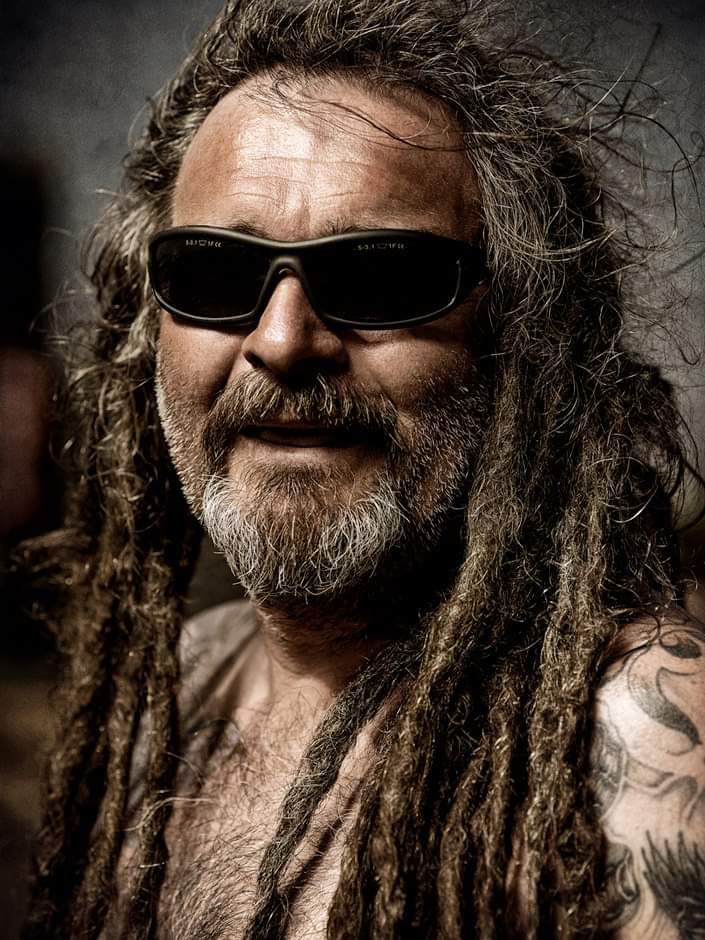

    In memory of Pete Cawthorne 1963 – 2021
  • Mindful Acceptance

    Paradoxically, it’s so often the case that our emotional ills are the result of wanting to alter a mood or feeling. We might feel down and sad – or we might be at a loss to pin any kind of description on how we feel – yet what we do know is, we’d rather feel different. We want to feel happy, calm, and at ease with ourselves, of course we do. However, the more we want to change our mood, the more it seems to persist. In fact, our discomfort only raises our awareness of just how miserable we feel. 

    We all know the most common and easy path to changing how we feel, yet food, alcohol or whatever our particular poison will never be the wholesome solution

    There’s no doubt that opening a bottle of wine has become one of the accepted solutions. I’ve certainly been in that place and only stopped when the excess acid in my stomach started to feel like a knife wound. For me, choices became limited. I knew my lifestyle was harming me. As with the majority, my reasons for drinking were related to powerlessness. I felt powerless to change, not only in how I felt but also with the situation I’d found myself in.

    It may seem odd to state that alcohol awards us power, yet this is certainly how it feels at the time. Alcohol alters our consciousness, emboldens us, and helps us feel more confident; reducing our inhibitions. Get too far into that bottle of wine though (or the second or third), and rationality starts to go out the window. Our consciousness becomes so distorted we begin to lose our critical faculties. Never a good place to be. 

    Let’s compare this to a crisp winter’s morning. In the cold light of day, we say: “never again” we understand the illusion

    We can easily understand why we might eat and drink to excess. After all, who wants to feel miserable? We go with the flow, and what becomes the accepted norm is simply that: the accepted norm.

    The wholesome answer is very unlike the accepted norm and, as such, feels like a challenge. And indeed it is, yet who said this was going to be easy? If that’s what you’re being told, you’re being lied to. 

    As long as we need to be like everyone else, the swim upriver will be hard. It’s only when we move into the quieter, calmer waters of solace that we accept

    If we’re going to learn how to feel happier, with less external stimuli, there is a certain mindset we must adopt. When we know how to meditate daily, there comes a point when we begin to recognise the power of acceptance. 

    Our moods are there for good reason 

    Feeling unhappy may well be the minds attempt to get us to stop. At times, the mind needs reflection. The shifts in mood we experience are there for good reason, and we must acknowledge this. Seeking to change ourselves through the accepted norms only adds to our burden. Whereas a brief period of reflection can lead us to an acceptance that whatever it is we’re feeling, it’s okay to feel it. You’re okay. Recognise the illusions that have become the accepted norms.

  • Truth, Lies and Whether it Actually Matters

    Now I can only believe it if I see it with my own two eyes, and even then it will only be my truth, and no one else’s

    I made a mistake this morning, I decided to read the news. I allowed my brain to be infected by the nonsense and I also allowed it to upset me. It was for my partner to make me aware of my horrible negativity. Once again my downcast-destructive side came to the fore and it was driven by the media. Not truth, you understand, but the media. And it really is the case that you cannot believe a word they say. In this respect there is no point in reading it. Their desperate need for my attention creates their need to fantasise. Propaganda and nonsense.

    Again and again I make the mistake of allowing my attention to wander off to the places where truth and lies intermingle. And now I’m in a state of constant confusion and unbelieving

    Because of this I’m now asking if truth or lies actually matter. Can we really ever distinguish between the two? I feel the reality is, truth can only ever be something that occurs within the mind, of the believer. All truth is subjective. We must believe it before it becomes true and even then it is only a belief. It is only our belief. Just because we believe something doesn’t mean it’s true for anybody else. Often it can prove to be completely the opposite. Do you believe, for example, that sexual abuse of our children is at epidemic proportions? Do you believe that there are millions of podophiles amongst us?

    I suppose it matters that we make children aware of the dangers. Whether we want to believe it or not there is a dark side to human nature. Evidence speaks the truth. A child has no hope of protecting himself or herself if there’s no awareness of the dangers. And yet this doesn’t mean that we have to read about it every day. It doesn’t mean we must fix our attention on this every day. And we must accept all the darkness that’s possible, however unpalatable, we might find it.

    I find myself not wanting to believe the despicable nature of my fellow human beings, but I must be cautious of what dangers, there are in denial.

    If I choose to ignore the unpleasant what will that make me? Happy, or just as ignorant and innocent as the vulnerable child. Awareness enlightens us sufficiently so we may protect ourselves. Ignorance IS the darkness. There is such danger in this confusion between truth and lies. In time, we will simply fail to see, and how will the blind ever protect themselves?

  • Stimulation

    The need for stimulation is fine and creating the need for it’s opposite is also fine

    Think of a child constantly seeking stimulation. When a child is stimulated, it’s often because a parent, carer, or teacher is attentive to them. They’re being entertained, educated, and played with.

    When the child is stimulated in this way, the result is happiness, excitement, and growth. Ultimately, and for obvious reasons, we can become totally addicted to this.

    On a personal level, the later part of my childhood was filled with the kind of stimulation fear brings: chaos

    Interestingly enough, I feel that as a result of this chaos, my mind often craved calm. The only problem with calm is its seeming lack of stimulus.

    Children who’re unfamiliar with calm, only knowing chaos, become very accustomed to the need for stimulation. We can end up conflicted, wondering about the exhaustion we often feel and why we can’t seem to turn off our need for constant stimulus.

    Wanting is driven by our addiction and craving for stimulation

    It harks back to childhood and the way in which we were stimulated then. The positive of this was experienced by lucky children who were encouraged to find stimulation through creativeness. We can easily recognise those individuals, especially those who continue to be creative all their lives.

    Caution is advised, though, because craving the kind of stimulation creativeness brings does engender a degree of danger. However, the survivors of this danger are those who’re able to find balance and a calmness of mind in between their creativeness. Sting would be a fine example.

    And so we can experience happiness, growth, and contentment if we have a healthy balance between our need for stimulation and our need for calm.

    Learning to meditate, in order to find improved mindfulness, is the easiest way to begin finding this kind of balance. The alternative could well be a lifetime seeking to understand the conflict caused by our addiction.

  • Aware of Awareness

    Image by Kaserei
    There is no intelligence involved in being aware and so in this respect we’re all over qualified

    It came about, not so long ago, that I moved to a quiet part of the country. I can’t even claim that this was any kind of conscious decision, I just knew that change was needed, as my life had come to an end. My business was concluded; time to run.

    It’s purely an observation to say, when time moves slower in certain parts of the country, or whole countries and cultures for that matter, those who have lived faster lives by comparison will feel over qualified

    So many of us are driven by our intellect and beliefs in success, and when we’re told to slow down and distance ourselves from the methods employed by others, it proves difficult. It’s the city banker or politician who meets the Buddhist monk. Never the twain shall meet. And the question is: how do we create a culture of awareness?

    Perhaps it helps to separate the monk from mindfulness and the guru from awareness

    I feel this is easily achieved. In the same way the over qualified, who move to quieter parts of the country, must learn to stoically compartmentalise, we can separate what we normally associate with meditation, mindfulness and awareness. In exactly the way mindfulness teaches us to become aware of our thoughts, we can question any of those old associations.

    It’s a hindrance for me to think about how others want to run their business. Instead I understand my responsibilities and never step beyond this

    It isn’t me that loses out through my silence. After all, as the wise man said: “those who know don’t talk.” What I know of human nature is, if a job has been done a certain way for a long time, who am I, or any outsider, to question those methods. And so we no longer need the guru or the monk to teach us how to be aware. Those times are gone. Just remove your preconceived ideas, close your eyes, notice the chair beneath your body, your feet on the floor, and pay attention to your breathing – your point of focus. Notice your thoughts, become aware, and bring your mind back to point of focus, once again. Remove your intellect. Emigrate to a quieter country. You are aware.

  • The Restless Horses

    It has everything to do with awareness of mind

    We might think it’s a secret, or what only the few seem to possess, yet there really is something so simple, and so beautiful, about being aware of your state of mind. It’s the difference that makes the difference.

    When we can answer these next questions we start to understand: From moment to moment what am I thinking? What is my mind seeking?

    When meditating, I sense the thoughts within my mind, as being similar, to a paddock full of wild horses. These horses are noisy and restless. They’re stirring up the dust; it’s arid within the confines of the paddock. They want to escape to an imagined lush green land. They want the satisfaction this would bring. They’re sweating and the whites of their eyes are showing. Their ears are back; focusing only on their fear and agitation. They long to escape.

    The similarity is this restless craving to satisfy their need. My mind craves the escape of thought. It wants to escape its confines

    When the mind is constantly stimulated and engaged it’s happily satisfying its addiction. Like the alcoholic taking the drink, or the sugar addict biting into the chocolate bar – satisfied and happy – if just for a moment. The nature of thought is no different. It becomes addicted to movement, thoughts, and stimulation. If never slowed and calmed it remains as the restless horses. The restless horses have become fearful of their confinement.

    The paradox is, our minds, even though busy and stimulated, are no less restricted. As with any addiction, it serves to distract us, from the real issue

    Think of overeating. When we’re eating we’re happily enjoying the pleasure of satisfying a need. We do this to excess, when the pleasure we gain from eating, has become greater than our conscious awareness. When we’re overeating, or eating the wrong things, we’ve lost conscious control. We’re simply indulging in the pleasure and distraction we gain; we’re mindlessly bolting from the paddock to get at the lush green grass. Feelings of hunger have negative associations to food addicts. They’re blindly satisfying a need with no thought as to why.

    Medicine for your mind    

    Firstly we must imagine that we’ve employed the services of a horse whisperer. We invite him into the paddock and watch, mesmerised as he calms the neighing, crazed wild horses. Once calmed, something magical happens. The horse whisperer is able to open the gate and gently lead the horses out. Once there they’re able to eat from the lush pasture all around. There’s no rush, there’s no wildness in their eyes, anymore. Their ears are forward and with a gentle swish of the tail they stop to stare. Once calm, there’s more for all of us to see, and explore.

    Consider for a moment what the horse whisperer has achieved

    How did he calm them? He calmed them by making them aware. He took the wild panic away through showing them what it was to be calm. He moved slowly and gently amongst them. He lay a calming hand on their manes. He showed them how safe it was inside the paddock. Once they understood, there was no rush to escape; no panic, fuelled by one another. He calmed the horses sufficiently for them to become aware.

    Slow now, be aware of the nature, of your mind

    Notice how it craves to escape. Notice. Where is it seeking to escape to? Away from itself perhaps? Away into thoughts of the past, future or fantasy? How is it we imagine these thoughts are richer than now? Is the alcoholic seeking to escape from himself? Is the food addict doing the same? Our minds have learnt to crave this wild escape; this escape from ourselves. We’ve become addicted to how it feels. 

    Why are meditators happier? They’re happier because they’ve regained awareness of themselves in the present moment. Imagine how it would feel to calmly explore the lush green, present-moment-pastures, the craving for mindlessness is keeping us from. Calm and still our minds will be satisfied.

  • Mindfully Unsuffering

    Image by KELLEPICS
    It is said by some that suffering is created when we’re in a state of wanting or desiring. Is this true?

    It’s certainly the job of all of us to question what we and others believe. We can’t just accept what we’re told as true. We do have a tendency to do this a children. Our critical faculty isn’t sufficiently developed for us to successfully question teachers and parents. However, once we’re grown, it becomes our responsibility to question what we’ve been taught. We rid ourselves of the suffering experienced by others in this way. And this brings me to the belief that desires and wants equal suffering.

    It stands to reason that wanting what we can’t have creates tension but is this tension a form of suffering?

    Think of the word intention. What is your in-tention? Is it your intention to do good in the world? Is it your intention to get what you want? We never get what we want if there’s no intention. Let’s say we eradicated all wants. Would that solve the problems of humanity? How would things have turned out if Edward Jenner hadn’t wanted to cure smallpox? How would things have turned out if he had no intentions? Surely those of us who want to help ease the suffering of mankind are driven by desire and intention.

    Mindfully unsuffering involves the process of questioning the antiquated beliefs of others

    As time moves forward so must we. It is unacceptable to simply continue swallowing the beliefs and philosophies that were established hundreds, if not thousands, of years ago. Suffering is perpetuated when we’re mindless of the negative influence of antiquated beliefs. Suffering is when we stay chained to the growing pains of the past. We must move forward and recognise our responsibility to each other. We must drop our useless beliefs from the past.

  • The Joy of Attention

    Most of us have seen or heard the parable about the Two Wolves (if not here it is). It’s a very simple way of demonstrating how we create or ease conflict. In the same vein, I feel it’s useful to consider anything we choose to give our attention to, as being the thing that becomes the most prominent.

    Is it obvious that we are our thoughts?

    We might think it obvious that if we’re preoccupied with thoughts of anger, revenge, guilt, or any negative, that it eventually reflects in the body and how we behave. And yet is it that obvious? Surely if people really were aware of how the bodymind is affected by thoughts and behaviour, they’d modify this, by taking better care of their minds.

    It does, once again, come down to awareness

    We can only imagine how the world would be if our leaders paid more attention to their own thoughts and behaviour. My own recent thoughts relating to death and loss have brought this issue home to me. I’ve recently been telling myself that with each peaceful person we lose, the world feels like a darker place. And indeed it will be if we give these kind of thoughts attention.

    The antidote is the awareness of our thoughts

    Everyday the world experiences gains and losses. Everyday something is destroyed and something is created. There is a natural balance within the universe, it’s something I believe. And so we can choose to tip this balance – through dark depressive thoughts – or we can tip it the other way, it is entirely up to us.

    The joy of attention is all about realising how our lives are dictated by our thoughts

    Those who lust for power and influence through nefarious means will always end their days in a sticky mess. It’s the old proverb: Live by the sword die by the sword. Much better to pay attention to the beauty, love, peace and kindness there is in the world. And no matter how prevalent those who lust for what they can’t have might seem, simply place your attention on what you already have, for however long, that might be.

  • Come Out of the Darkness

    Image by anncapictures

    Close your eyes and imagine yourself walking along a passageway within a cave. There’s very little light and the walls are cold, dark granite. There’s sand beneath your bear feet but it feels cold, damp and difficult to walk through. There is a light ahead; a small pinprick of light that seems to be getting larger as you walk towards it. Closer and closer to the light now, eventually stepping out of the cave onto a warm sun-kissed beach. There are waves from an aquamarine sea gently lapping against the shoreline and soft white clouds drifting lazily across a beautiful blue sky. And the sand beneath your feet is fine, dry and warm. And you feel a sense of safe, tranquillity, having stepped out of the darkness now.

    Now that you’re in the light take some time today to consider the power of belief

    Because I reread this post it had the effect of defusing anxiety and started me thinking about oneness. It made me realise that when we believe in our oneness, and understand the importance of togetherness, we have nothing to strive for other than confirmation of this. It can be the case that everything we do at home or work is an expression of this belief. And when we wholeheartedly believe in something there is no effort involved. Allow me to explain.

    Much of our thoughts and activities are based on affirming our status/identity and competitive nature. It’s certainly not for me to question the validity of any of these things, however, when we believe in oneness, we’re able see beyond the superficial. When our drivings are based on the beautiful belief that we are simply one, interdependent species, our fears subside. When we’re no longer striving to be seen as different, better or more, we can get on with the business of living in the present. We may always end up superficially different but when we stop striving for this, (with our minds anywhere other than present) and just be who we naturally are, we remove much of the anxiety modern life brings.

    Comparing ourselves to others can be considered a primordial instinct but it doesn’t mean we can’t move away from this

    Gaining freedom from instinctive drivings is an extraordinary thing. How would life be for us, if rather than simply transposing our instinctive drivings – from fighting in the jungle, to things such as money and identity – we actually sought to conquer them. Being aware is part of the solution. Raising awareness to our true selves – beings that seek togetherness – helps us find the oneness that resides within us all.

  • Human Excellence

    This week has seen the successful unfurling of the James Webb space Telescope, an extraordinary device that will enable us to look back, almost, to the beginning of time. 

    It is hard to imagine what has needed to come together for this project to have got so far. We have yet to see any images from the telescope but, judging from current progress, it seems very likely that we’ll be blown away by the results.

    When we take the time to consider this monumental achievement with all it’s planning, complexity and collaboration, we can know, without a doubt, that anything we might want to achieve is possible. It clearly shows us that anything we put our minds to, provided we have sufficient resources and the necessary commitment, we can succeed. 

    It is important, no matter the cost or however confused we might initially be about the logic of such endeavors, that we acknowledge the challenges this team will have faced and overcome. It is important to apply this to ourselves and our own endeavors. We can be inspired by their achievement.

    Looking back into the distant past is one thing, and yet, if we choose to, we can cast our minds into an imagined distant future 

    A future where we have cracked so many of the mysteries that life presents us with. If we look hard enough we can see a future where we have unfurled so much more of the limiting aspects of human nature. In particular the aspects of human nature that hold us back. 

    Imagine a future where the sensitivities of the human mind are far better respected

    It’s only since developing mindfulness have I become aware of how our thoughts are truly what we are. I can only imagine how things will improve for us humans if we were to take better care of our minds. For this to happen we must begin at the beginning. The place where all of our actions begin: thought. 

    It is certain that each individual team member, responsible for the development and deployment of our new space telescope, will have been dedicated and mindful of their respective roles. They will have been focused and determined to do their utmost to ensure the project’s future success. 

    Whatever it is you would like to achieve, it starts with your mind. Plan to improve your awareness, learn mindfulness now.