Practising Mindfulness Latest Posts

  • Know Meditation Know Mindfulness

    This week, I slipped. That’s right, I slipped into an old pattern of feeling negative, stressed, and eating junk. And the only reason for it was forgetting the importance of Meditation

    Monday and Tuesday felt like great days. I felt calm and contented. I ate exactly the amount of food that was right for my body and activity. The energy in energy out balance was in tune. I felt great. The rest of the week gradually went to shit and the reason? I forgot to Meditate on each of the subsequent mornings.

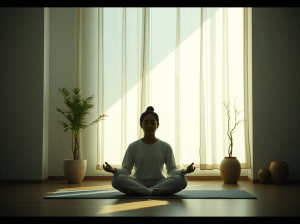
    My usual routine is to do some stretches (yes, I’ve succumbed and learnt some yoga), and then I sit for around twenty minutes to meditate and calm my mind. When I do this, the day is always improved, my mood is better, and of course, it’s conducted Mindfully.

    When my day is conducted mindfully – that is to say I’m predominantly in the present moment and aware – it always runs smoother. The quality of my work is on form, and the customers I meet feel better for the experience

    I’ve come to realise that as I reflect on the week, it was the days I didn’t meditate that were markedly different. I felt harassed by my boss and my customers’ demands. Their demands hadn’t changed it was my mood and attitude that had. In an attempt to change my mood, I craved and ate sugar. And after eating pastry and chocolate, I actually ended up feeling worse! Guilt stepped in!

    Each day, my stress and problems grew worse. It was as if my forgetfulness (opposite of Mindfulness) was some kind of sick experiment on myself to see how shit I could make my week. To make matters worse, I didn’t go for my daily walk. What the hell!?

    The positive from this is how I’m reminded of the importance of sticking to my routine. For me, routine is very important

    Every negative has its opposite. I’m now renewed in my endeavour to be an enthusiastic exponent of Meditation that leads to Improved Mindfulness. I’m reminded of how important it is to Meditate every day. If we want to strengthen our minds and improve the quality of our lives, we must practise. We must practise Mindfulness to stay on the path. It is easy to forget its power.

    Remember, the mind is predisposed to lead you along the path of least resistance. Old established patterns that conserve energy are easily fallen into.

    The mind easily falls into old patterns of thinking and behaviour. And like cart wheels that are stuck in a rut, we must, from time to time, use that little extra effort to pull the mind free.

    We have to focus and concentrate. This strengthens the mind. And just as a weightlifter might occasionally feel tired and disinclined to work out, he must persist. The results speak for themselves.

  • Mindful of Mind

    Be mindful of your mind and become aware of how you create the reality you’re living

    Your reality is determined by your thoughts and drivings. The filters to life are your beliefs. If, for example, I choose to put a backpack on and simply walk the earth, how would my life be? Life would initially become very frightening and insecure for me. I would experience hardship and hunger. We all have the capacity to survive extreme hardship. As such, in time, my life would open up into something extraordinary.

    No telly, no media, no influence other than the world of nature I see around me. Without the influences of society how would things change? Without a ‘normal’ life, doing everything I believed I needed to do in order to fit in, there would be a massive shift. If I stuck with it for long enough my fear would fade. I would be as free as a tramp. My beliefs, no longer fed by ‘normality’, would change. I would need to be cautious. I might be in danger; shunned and perhaps even hated by the rest of society. My freedom would terrify them.

    Most of these changes would happen as a result of the quiet

    Mindfully going about the business of walking the earth my mind would become calm. My internal dialog would change. The old dialog, previously there simply as a means of confirming my old identity, would be fading. Thoughts about where my next meal was coming from and where I would sleep later in the evening would be my overriding concerns. My mind would certainly not be filled with opinions and judgements about the activities of other people. I would need to draw no comparisons. My thinking would change.

    Being aware of my thoughts would help me ‘catch’ the old habit of comparing myself to others. I might walk past a large beautiful house and momentarily I might start making a comparison. They have everything and I have nothing. This comparison is easily quashed when I become aware: It is me that has freed myself. The house, the status; all there as a prize for the owners success in life. What success? Is success the ‘trappings’ of life? Or is success the discovery of ones self? Ones mind?

    Is success measured by our ability to conform to the ‘norms’ set out by society. It certainly seems this way. What happens when we measure success as non-success? As non-attainment? What happens when we see how success is something built on our need for power over others? I can finally see the power in humility. It is in fact the humble who have true power. The humble-aware are allowing the rest of us to continue making fools of ourselves in our pursuit of power.

    For a time we may lose our minds in our need for the illusion of power. We find our true power when we find our self

    Returning home to ones self is achieved through becoming aware. Our true power is realised when we have awareness. Awareness of the consequences of our thoughts. Awareness of cause and effect. Control over the nature of our thoughts. The strength of mind to bring ourselves home.

  • Mindfulness is a Responsibility you Owe to Yourself

    Taking responsibility for the health of your mind is as important as keeping your body clean and feeding yourself a healthy diet

    I woke this morning feeling guilty. I was thinking about all the people I’d harmed in the past. My poor behaviour. How the battles I fought with myself to try and  make sense of life had impacted the people around me.

    I thought about my ex mother-in-law and what she would say to me. She would say: ‘You treated my daughter so badly!’ And I thought about a response based on what I now understand. I would say: ‘That’s right, and have you taken responsibility for your part in that relationship?’ I imagined her indignant response of ‘how dare you! Ridiculous of course, just as that whole episode of my life was. Everybody with their own agendas seeking self-centred ends. Using and abusing. No one is without fault. No one is squeaky clean. We’re all just learning.

    And now there is no guilt. When I realise how everyone needs to take responsibility for their part in any conflict, guilt melts away. Only now is there any chance of resolution.

    Responsibility is such a beautiful word. Through applying it to our lives, we will see the ease with which we can become healthy.

  • Mindful Protection

    Gently bring the mind back into the present moment through focusing on the breath

    On the occasions, when we choose to open our minds to what the media is showing us, it seems like the world has gone mad. Has it ever been any different? Large scale conflicts are only symbolic of the turmoil and conflict our leaders are facing. Warped ideology (from our perspective) anger, fear, the need for control, the ego, et cetera, et cetera. All symptomatic of minds out of control.

    Take control of your mind. Take control of your life

    Self consciousness, self awareness, call it what you will. The greater our awareness of thoughts, and how they dictate the kind of life we live, the better. There are those who thrive on chaos. In fact they long for it because it’s all they know. I can relate to this. For much of my time I rejected all that was good in my life through my minds need to feed its addiction to chaos. Constant stimulation. Constant craving. The constant need to ease my loneliness. A loneliness fed by my need for chaos. Can you see the destructive cycle I was in? This is what so many of us are doing: Seeking to ease our loneliness. In the process, our minds take us unceasingly toward what we refuse to look at: Our fear and loneliness. It is us that’s creating the destructive cycle. It is our minds attempt to understand. Great leaders and philosophers of the past knew this and looked to help humanity in its struggles. Until we break the cycle, how will we ever understand? We cannot read and implement what the great leaders of the past taught us without first becoming aware.

    The solution, countless enlightened individuals have found is, mindfulness

    With practice we can get to the root of what we are. We can find a calmness of mind, underneath the chaos, that reveals pure awareness. When we have this, we’re able to notice all the beauty that surrounds us.

    Personal circumstances matter not. There is suffering, yet our suffering can be eased, when we have clear insight into how it is us that amplifies our self-destructive tendency.

    We could choose anger

    Mindfulness helps us understand, it’s what we choose, that determines the quality of life we experience. No matter your circumstances, through learning how to take control of your mind, you empower yourself to make the right choices. If you want purpose in your life make it the development of mindfulness. Develop a beautiful mind. People with purpose make their own choices. Not those dictated to them by others.

  • Sowing the Seeds

    If you have a plan place Understanding Meditation and Mindfulness at its Heart

    Love is Every Step – Thich Nhat Hanh

    It’s certainly how I intend spending my retirement. Someone recently asked me if I was concerned about the future. Being concerned about the future would be to use the wrong terminology. I would suggest, rather than use the word concern, use the word intension. It has positivity.

    I’m using a degree of tension to stay on track. Think of the tension we must apply to a bowstring before firing the arrow. We must have intension as much as we must have purpose. Those with purpose to life tend to have far fewer addictions (stronger willpower) and healthier minds in general.

    In order, to gently and successfully progress with our planned purpose, awareness is key. Mindful of every step.

    Keep an eye on the future

  • Mindful of Your Kind

    Kindness is the language which the deaf can hear and the blind can see – Mark Twain

    Being mindful of the limitations, and dare I say it, the stupidity of others, is an act of kindness to oneself. As time goes on the divide can only get bigger. . . this divide between the mindful and the forgetful. I think, ultimately, the survival of the species depends on it. There are those who are awake and aware and there are those who are not. And we must be kind. Because they really do not know what they do. It is, as Mark Twain points out, a question of kindness.

    Mindful people gently get on with their day, spreading a little kindness, where they can

    I believe now, that it is the quiet and gentle curiosity, of the behavior of others, that will demonstrate how we must be. Without judgement we can pause and reflect on how the majority live. We can then ask: What must I do to live a better life? When observing the difficulties others face we can ask: What could that person do to move forward in their life? How can they move on from their pain? How can I use kindness to help this person remember love? How can I help them become aware? And of course a genuine kindness, can only be offered to others, when we’re able to offer it to ourselves.

    By noticing the strength of racism, prejudice and hatred in society, we can gauge the level of fear

    There are those who believe they are in some way better than others. They believe they are superior. I have been pulled up on highlighting this fact, because in the process of this, I’m being hypocritical. I’m making a judgement and forming an opinion. The very thing we should avoid if we want a peaceful life. It’s a struggle to find the right balance with this. Do we remain quiet? Do we become indifferent to fear and hatred? Or do we briefly place ourselves above it in order to show people what the real issue is? For me, when I simplify humanities struggles as being a fight between love and fear, I’m able to allow my own fear to gently subside. What purpose does it serve for me to become emotionally upset at what I I see? The emotion drives me to seek answers and understanding. When I have this my equanimity returns.

  • Qualified with Courage

    A long time ago I was told that you never really qualify in the world of self-development

    When we consider who might be better qualified to teach us any form of self-development, what do we look for? Can an individual who can’t paint teach us how to paint? I feel that if someone has an interest in teaching us how to paint it would be because they wanted to know how to do this themselves. It’s said that in order to be good at something we must teach others how first. The question is: If we lack a certain skill ourselves, might we fall down in our ability to confidently impart our knowledge? I imagine it to be very difficult for the self-centred to teach self-awareness.

    Just because we might lack the ability to do a certain something ourselves doesn’t mean we lack the knowledge of the processes involved in achieving it. Even if we can’t do something ourselves we can still teach the theory of what we must do

    We must remember: knowing the theory doesn’t mean we actually understand it though. We can talk about quantum mechanics and not have a clue how exactly little things influence the large. However, the teacher who has a deep understanding of their subject, is far more likely to have students who go on to become masters. As the saying goes: He can talk the talk and walk the walk.

    Self-discipline

    It must follow then, that someone who lacks self-discipline, will struggle to impart how others can also achieve this. It’s far more effective to be taught how to give up alcohol by someone who has experienced it’s limiting nature and is now teetotal as a result. Further still, seeking to be a less self-centred adult, begins when we’re able to recognise this limiting trait in others. Often, self-centeredness, by it’s very nature, inhibits the sufferer to see anything at all outside of themselves.

    And so in my view, the teacher is ready when he has the confidence to help students understand how it feels to walk in the shoes of a self-centred, undisciplined human.

    This confidence is gained when he can remain hungry and fearful and simply see these things as something to endure. A period of endurance is then followed by the prize of the awareness of courage. For it takes courage to be a human in full command of the self. With this, any individual, can change their world for the better.

  • The Energy of Habits and How to Gain Control

    Our habits are a response. We do have both good and bad habits. And so we want rid of the bad, what must we do?

    Becoming aware is the first step. With meditation, that leads to improved everyday mindfulness, we’re better able to pause before acting on impulse. We might feel hungry and our habit is to quell this hunger with snaking. Instead, mindfulness shows us how to embrace the feeling of hunger, and instead of seeking to instantly dismiss the feeling, we experience it. We see the positive of hunger (we’re gaining a healthy weight). Not only are we better able to manage our weight with mindfulness we’re better able to decide what types of food we put in our system.

    Our habit is to respond to anxiety with consumption. When we choose to feel and work through the anxiety, we’re choosing wholeness. We’re choosing to become more human, and in turn we’re learning to be okay, with every aspect of this. Fear dissipates when we acknowledge it and understand what exactly we’re fearful of. Often our anxiety is triggered by unconscious processes learnt in childhood. We cannot discover these things – and then grow – if we continue with our negative habits.

    Perhaps the habit we have is to have a drink the moment we want to relax. Rather than instantly reaching for that bottle of wine, or whatever, how would it be if we were able to simply stop and breath

    We learn to associate. We condition ourselves to associate feelings with activities. This is especially the case with alcohol. Happy times, we drink to enhance this. Sad times, we drink to ease this. Being without the anchor of booze we’re cut adrift in a world of sharp feelings. Over time we relearn how to gently deal with our human emotions. Our habit can become of mindful considered actions. Actions that consider the wellbeing of ourselves and others.

    Negative habits tend to be the minds way of conserving energy. Very little energy is used in following an established pattern. Generating positive habits initially involves increasing the metal energy we use. Effort will be required. And just as the mind conserves energy following poor habits, in time, it will act on new patterns that have been emplaced by design. The mind will do this for the very same reason it previously followed poor habits.

    Want to stay of the vodka and crisps? Want to feel better and live a longer healthier life? Join the mindfulness revolution.

  • The Power to Choose over the Pervasive Influence of Anxiety

    We can of course get drugs to fix most things (or so we’re led to believe) and are the drugs a long term healthy fix? We may also be led to believe we’re powerless to make the changes we need. We may believe we’re unable to take control

    Intentional or not it is in the drug industries interest that we continue to believe we need their assistance. There is no doubt modern medicines have their place and value. It would certainly never be for me to advise anyone about medication prescribed by professionals. We must remember that those professionals are as reliant on drugs as those they prescribe them to. So rather than this reliance, we can seek to find the answers from within ourselves, and if those answers are beyond any recourses we hold, we must educate ourselves into changing our thinking. How does that sound? Challenging? To love a challenge we must firstly keep an eye on the prize.

    Some, after many years of searching, finally see the true reasons for their difficulties. Those that find the answers can then help us take a shortcut; a rabbit run to our prize. To take advantage of this we must listen and pay attention. We must be mindful

    Always stop and take a moment to consider the root causes. What are our responses to anxiety and fear? So many children are pacified with sweets and food. Children struggle to deal with strong emotions. Parents often struggle to deal with their children’s emotions. Instead of remaining calm and reasoned a parent may instantly seek to ease their child’s unease with sweets and food. In whatever way we seek to ease our children’s upset, we can trace our own experiences back, and see how similar solutions were offered to us. These solutions have grown and mutated over time. We may be copying the behaviour we witnessed as a child. Sometimes we’re not even consciously aware of how we reach for the distraction before experiencing the emotion.

    Instead, we must make offerings of love, and comfort. We then wait for the mind to gain control in its own time. The avoidance of feelings, through the usual unhealthy distractions, only delays the inevitable. They will always surface in some form. If we continue to eat, instead of feeling and working through anxiety, we end up with all the associated diseases that come with obesity

    The root of our anxiety can be simple. A lonely child is standing in the que at the tuck shop because he is afraid. The sweets will act as a distraction and the sugar itself will lift his mood. When we spend time with the child within ourselves, this simple act, can ease our loneliness. As adults when we’re mindful of our habits – through seeing their root – they become less like habits. When we’re aware of the distraction the feelings will surface. We must feel them to be free of them. Will drugs help us with this? Or will our awareness?

  • Feelings and Mindfulness

    If our intention is to gain better control over our behaviour mindfulness is the answer

    Often we react instinctively to our feelings. The feelings or sensations could be anger, pain, hunger or sadness. Lets start with the feeling of hunger. Hunger isn’t generally considered to be a desirable sensation. We want rid of it as quickly as possible. Especially if we’re used to the modern scourge of instant gratification. Needing to be rid of hunger instantly causes us to snack, and snacking is unhealthy. If we want to retain a healthy weight, snacking and the need for instant gratification, is to be avoided.

    Instead of the avoidance of uncomfortable feelings we must welcome them in. When we mindfully acknowledge them they naturally fade. We then have the advantage of not having acted on them

    The same applies to anger, emotional pain, and sadness. Avoidance will always involve some kind of mechanism that results in prolonging our suffering. At the end of a relationship, or any kind of loss, we might experience a whole range of feelings. Pain and sadness are avoided through seeking to replace what we’ve lost instantly. Instead, when we mindfully move through the process of experiencing our emotions, healing occurs. In time our suffering lessons. Avoidance simply defers our suffering. It can manifest in another form

    On to anger. The feeling of anger has power. How we use this power depends very much on our awareness of it’s root. Much of anger is driven by fear and there are times when we must act quickly to defend ourselves when we’re fearful. Even so, the ability to mindfully consider the ramifications of expressing our anger, is easily equal in it’s power. In fact, it could be said, that those who’re able to control their anger, are the ones who have the greatest power. The control of anger involves it’s controlled release. This can take the form of vigorous exercise. Now mindfulness really does have the power to make us well.