If you have a plan place Understanding Meditation and Mindfulness at its Heart
Love is Every Step – Thich Nhat Hanh
It’s certainly how I intend spending my retirement. Someone recently asked me if I was concerned about the future. Being concerned about the future would be to use the wrong terminology. I would suggest, rather than use the word concern, use the word intension. It has positivity.
I’m using a degree of tension to stay on track. Think of the tension we must apply to a bowstring before firing the arrow. We must have intension as much as we must have purpose. Those with purpose to life tend to have far fewer addictions (stronger willpower) and healthier minds in general.
In order, to gently and successfully progress with our planned purpose, awareness is key. Mindful of every step.
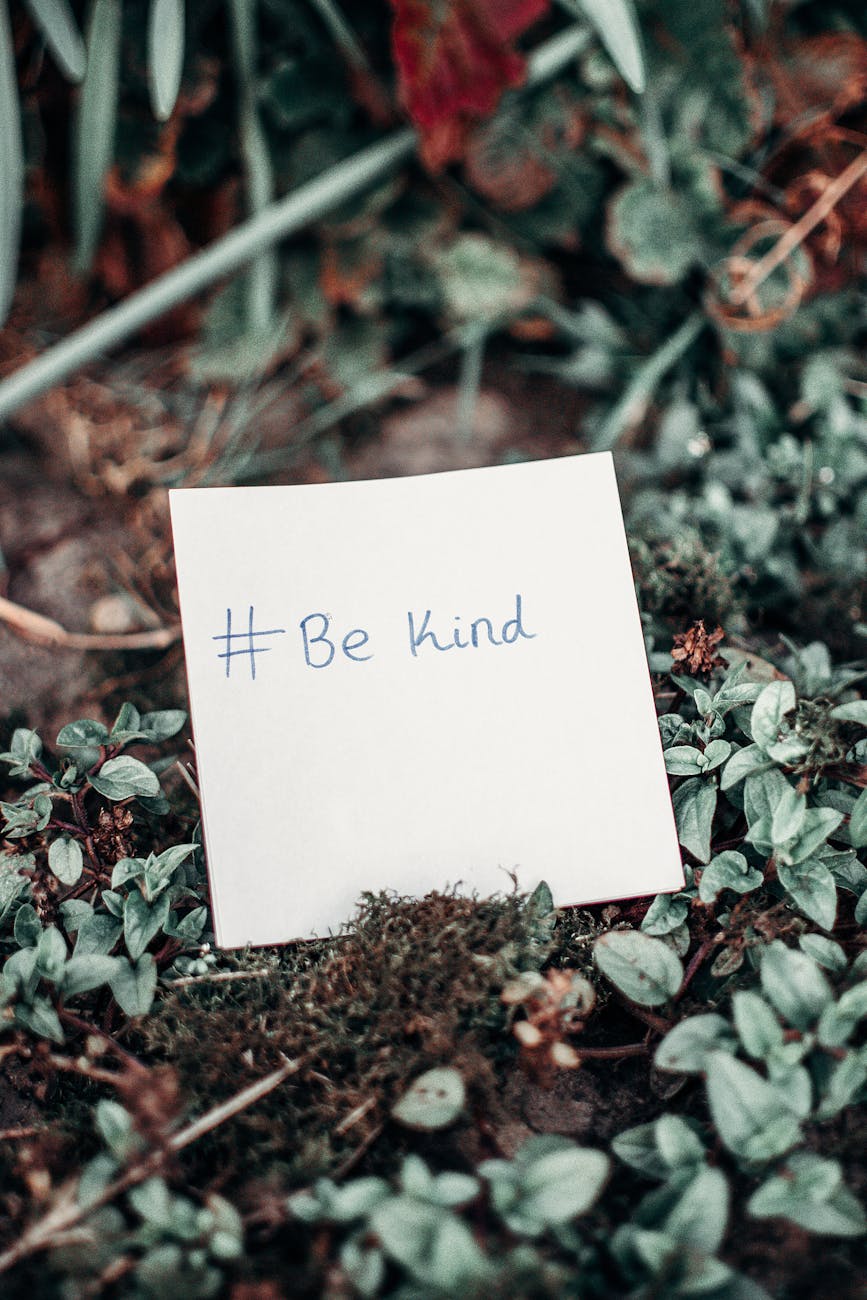
Kindness is the language which the deaf can hear and the blind can see – Mark Twain
Being mindful of the limitations, and dare I say it, the stupidity of others, is an act of kindness to oneself. As time goes on, the divide can only get bigger. . . this divide between the mindful and the forgetful.
I think, ultimately, the survival of the species depends on it. There are those who are awake and aware, and there are those who are not. And we must be kind. Because they really do not know what they do. It is, as Mark Twain points out, a question of kindness.
Mindful people gently get on with their day, spreading a little kindness, where they can
I believe now that it is the quiet and gentle curiosity of the behaviour of others that will demonstrate how we must be.
Without judgement, we can pause and reflect on how the majority live. We can then ask: What must I do to live a better life?
When observing the difficulties others face, we can ask: What could that person do to move forward in their life? How can they move on from their pain?
How can I use kindness to help this person remember love? How can I help them become aware? And, of course, a genuine kindness can only be offered to others when we’re able to offer it to ourselves.
By noticing the strength of racism, prejudice, and hatred in society, we can gauge the level of fear
There are those who believe they are in some way better than others. They believe they are superior. I have been pulled up on highlighting this fact because in the process of this, I’m being hypocritical. I’m making a judgement and forming an opinion. The very thing we should avoid if we want a peaceful life. It’s a struggle to find the right balance with this.
Do we remain quiet? Do we become indifferent to fear and hatred? Or do we briefly place ourselves above it in order to show people what the real issue is?
For me, when I simplify humanities’ struggles as being a fight between love and fear, I’m able to allow my own fear to subside gently. What purpose does it serve for me to become emotionally upset at what I see? The emotion drives me to seek answers and understanding. When I have this, my equanimity returns.
A long time ago, I was told that you never really qualify in the world of self-development
When we consider who might be better qualified to teach us any form of self-development, what do we look for? Can an individual who can’t paint teach us how to paint? I feel that if someone has an interest in teaching us how to paint, it would be because they wanted to know how to do this themselves. It’s said that in order to be good at something, we must teach others how first. The question is: If we lack a certain skill ourselves, might we fall down in our ability to confidently impart our knowledge? I imagine it to be very difficult for the self-centred to teach self-awareness.
Just because we might lack the ability to do a certain something ourselves doesn’t mean we lack the knowledge of the processes involved in achieving it. Even if we can’t do something ourselves, we can still teach the theory of what we must do
We must remember: knowing the theory doesn’t mean we actually understand it, though. We can talk about quantum mechanics and not have a clue how exactly little things influence the large. However, the teacher who has a deep understanding of their subject is far more likely to have students who go on to become masters. As the saying goes, he can talk the talk and walk the walk.
Self-discipline
It must follow then that someone who lacks self-discipline will struggle to impart how others can also achieve this. It’s far more effective to be taught how to give up alcohol by someone who has experienced its limiting nature and is now teetotal as a result. Further still, seeking to be a less self-centred adult begins when we’re able to recognise this limiting trait in others. Often, self-centeredness, by it’s very nature, inhibits the sufferer to see anything at all outside of themselves.
And so in my view, the teacher is ready when he has the confidence to help students understand how it feels to walk in the shoes of a self-centred, undisciplined human.
This confidence is gained when he can remain hungry and fearful and simply see these things as something to endure. A period of endurance is then followed by the prize of the awareness of courage. For it takes courage to be a human in full command of the self. With this, any individual can change their world for the better.
Our habits are a response. We do have both good and bad habits. And so we want rid of the bad, what must we do?
Becoming aware is the first step. With meditation, that leads to improved everyday mindfulness, we’re better able to pause before acting on impulse. We might feel hungry and our habit is to quell this hunger with snaking. Instead, mindfulness shows us how to embrace the feeling of hunger, and instead of seeking to instantly dismiss the feeling, we experience it. We see the positive of hunger (we’re gaining a healthy weight). Not only are we better able to manage our weight with mindfulness we’re better able to decide what types of food we put in our system.
Our habit is to respond to anxiety with consumption. When we choose to feel and work through the anxiety, we’re choosing wholeness. We’re choosing to become more human, and in turn we’re learning to be okay, with every aspect of this. Fear dissipates when we acknowledge it and understand what exactly we’re fearful of. Often our anxiety is triggered by unconscious processes learnt in childhood. We cannot discover these things – and then grow – if we continue with our negative habits.
Perhaps the habit we have is to have a drink the moment we want to relax. Rather than instantly reaching for that bottle of wine, or whatever, how would it be if we were able to simply stop and breath
We learn to associate. We condition ourselves to associate feelings with activities. This is especially the case with alcohol. Happy times, we drink to enhance this. Sad times, we drink to ease this. Being without the anchor of booze we’re cut adrift in a world of sharp feelings. Over time we relearn how to gently deal with our human emotions. Our habit can become of mindful considered actions. Actions that consider the wellbeing of ourselves and others.
Negative habits tend to be the minds way of conserving energy. Very little energy is used in following an established pattern. Generating positive habits initially involves increasing the metal energy we use. Effort will be required. And just as the mind conserves energy following poor habits, in time, it will act on new patterns that have been emplaced by design. The mind will do this for the very same reason it previously followed poor habits.
Want to stay of the vodka and crisps? Want to feel better and live a longer healthier life? Join the mindfulness revolution.
We can of course get drugs to fix most things (or so we’re led to believe) and are the drugs a long term healthy fix? We may also be led to believe we’re powerless to make the changes we need. We may believe we’re unable to take control
Intentional or not it is in the drug industries interest that we continue to believe we need their assistance. There is no doubt modern medicines have their place and value. It would certainly never be for me to advise anyone about medication prescribed by professionals. We must remember that those professionals are as reliant on drugs as those they prescribe them to. So rather than this reliance, we can seek to find the answers from within ourselves, and if those answers are beyond any recourses we hold, we must educate ourselves into changing our thinking. How does that sound? Challenging? To love a challenge we must firstly keep an eye on the prize.
Some, after many years of searching, finally see the true reasons for their difficulties. Those that find the answers can then help us take a shortcut; a rabbit run to our prize. To take advantage of this we must listen and pay attention. We must be mindful
Always stop and take a moment to consider the root causes. What are our responses to anxiety and fear? So many children are pacified with sweets and food. Children struggle to deal with strong emotions. Parents often struggle to deal with their children’s emotions. Instead of remaining calm and reasoned a parent may instantly seek to ease their child’s unease with sweets and food. In whatever way we seek to ease our children’s upset, we can trace our own experiences back, and see how similar solutions were offered to us. These solutions have grown and mutated over time. We may be copying the behaviour we witnessed as a child. Sometimes we’re not even consciously aware of how we reach for the distraction before experiencing the emotion.
Instead, we must make offerings of love, and comfort. We then wait for the mind to gain control in its own time. The avoidance of feelings, through the usual unhealthy distractions, only delays the inevitable. They will always surface in some form. If we continue to eat, instead of feeling and working through anxiety, we end up with all the associated diseases that come with obesity
The root of our anxiety can be simple. A lonely child is standing in the que at the tuck shop because he is afraid. The sweets will act as a distraction and the sugar itself will lift his mood. When we spend time with the child within ourselves, this simple act, can ease our loneliness. As adults when we’re mindful of our habits – through seeing their root – they become less like habits. When we’re aware of the distraction the feelings will surface. We must feel them to be free of them. Will drugs help us with this? Or will our awareness?
If our intention is to gain better control over our behaviour mindfulness is the answer
Often we react instinctively to our feelings. The feelings or sensations could be anger, pain, hunger or sadness. Lets start with the feeling of hunger. Hunger isn’t generally considered to be a desirable sensation. We want rid of it as quickly as possible. Especially if we’re used to the modern scourge of instant gratification. Needing to be rid of hunger instantly causes us to snack, and snacking is unhealthy. If we want to retain a healthy weight, snacking and the need for instant gratification, is to be avoided.
Instead of the avoidance of uncomfortable feelings we must welcome them in. When we mindfully acknowledge them they naturally fade. We then have the advantage of not having acted on them
The same applies to anger, emotional pain, and sadness. Avoidance will always involve some kind of mechanism that results in prolonging our suffering. At the end of a relationship, or any kind of loss, we might experience a whole range of feelings. Pain and sadness are avoided through seeking to replace what we’ve lost instantly. Instead, when we mindfully move through the process of experiencing our emotions, healing occurs. In time our suffering lessons. Avoidance simply defers our suffering. It can manifest in another form
On to anger. The feeling of anger has power. How we use this power depends very much on our awareness of it’s root. Much of anger is driven by fear and there are times when we must act quickly to defend ourselves when we’re fearful. Even so, the ability to mindfully consider the ramifications of expressing our anger, is easily equal in it’s power. In fact, it could be said, that those who’re able to control their anger, are the ones who have the greatest power. The control of anger involves it’s controlled release. This can take the form of vigorous exercise. Now mindfulness really does have the power to make us well.
Being made aware of what wholeness is and its importance for health and happiness is the first step
Wholeness, as the word would suggest, is the capacity to embrace all aspects of the self. To become emotionally whole, we must be able to experience and accept the whole spectrum of human emotions in a way that encourages their free movement. Put another way, we must free ourselves from the habit of judging our emotions as being either good or bad. In addition, we must acknowledge the possibility that we have suppressed certain emotions (parts of ourselves) due to past trauma.
There can be many ways in which we keep our emotional selves buried. It’s very straightforward. We may need to bury ourselves in books of a certain genre, take drugs, only ever listen to uplifting pop music, or obsessively pursue anything that takes the mind out of the present moment
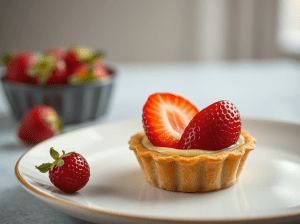
AI Generated Image
The exact mechanism used to distract ourselves isn’t that important. What is important is acknowledging that we can be better at accepting all of our emotions as being equally important. Take a moment and consider what your reaction is to the concept of emotional blockages leading to illness in the body.
For me, this idea has great value. And it really matters, not a jot, whether it remains a concept or becomes accepted fact. If we believe that emotions can become trapped in the body, and release and acceptance of these emotions helps us to feel better in the long term, this is what truly matters. I believe meditation, which leads to improved everyday mindfulness of how we avoid emotional wholeness, is key to our mental and physical well-being.
I’ve noticed in one of my local supermarkets that there’s a certain dessert that, although very expensive, is very difficult to get hold of
On the rare occasion I can find them on the shelf I buy a packet of two. One for me and one for my partner. They are delicious. A short crunchy pastry cup filled with sweet custard and topped with fresh half strawberry’s . . . yum! And this is the very reason they’re in such short supply; they’re so lovely. And here ‘s the thing; they are very expensive. Even so, they sell out, so very quickly. The lesson being: if something is right people will pay for it. It will be in demand. Especially if it satisfies a craving and makes us feel good.
Is it not the case that the whole of humanity is craving something good? With this in mind how would it be if you were the Strawberry and Custard Tart? How do we need to be so that we’re craved after and in demand?
In short, the simple answer is, we all need to be excellent examples, of human beings. And there are some excellent examples out there. They just disappear of the shelves rather quickly.
Quite the opposite are the extreme examples the media like to make so much fuss of. The humans that feel they have the right to dictate how we live, and even if we live at all, are most certainly not Strawberry and Custard tarts. More like a burger made of meat manufactured in a lab. Yuck!
I’ve heard it said that mindfulness is about developing an empty mind. In a way this is correct
Even though I was a little taken aback by this, I feel it’s far easier and more constructive to not disagree, but to develop the idea. It is in fact impossible for the vast majority of us to empty our minds completely. Practice meditation for sixty years though, and there’s a good chance, you’ll be getting somewhere.
It’s going to be far more constructive to explain very clearly what in fact we’re looking to achieve through mindfulness. What we’re seeking is a single-pointed awareness of what we’re doing from moment to moment. Be this washing up, mowing the lawn, or walking the dog. During any one of these activities there can be happiness. And this happiness is brought about in the moments when the mind is empty of everything except what we’re doing. When the mind is empty of distracting thought.
What we must have, in order to consider ourselves mindful (better still, Mindfulness Practitioners), is a single-pointed awareness of the activity we’re currently engaging in. No outside thoughts, feelings or distractions whatsoever. When we have this we will have discovered the secret to happiness.
That’s right! Happiness is to be aware of the present moment. It’s when our mind is taken from what we’re doing right now that our happiness is destroyed. When our thoughts stray
These thoughts might be comparisons (if only I had this that or the other) or they might be worries concerning the future. Perhaps your thoughts are persistent or lingering – I would be happy if I did this or achieved that. Whatever the distraction, the answer is not an empty mind, but a mind that is empty of everything except what is happening right now. The answer is an awareness of the nature of your thoughts. The answer is to be mindful (aware) of your mind. To think about your thinking.
The only way to strengthen the mind, so that a single-pointed awareness is achievable, is through Meditation
During meditation we study our consciousness. We become aware of our thoughts and feelings and practise putting these things to one side. To do this we must constantly bring the mind back to our point of focus.
This need only be an awareness of the breath. Awareness of the difference in temperature between the in breath and the out breath is a great way to start. Just twenty minutes per day, at least three times a week, is sufficient. And the better we get, at bringing the mind back to our point of focus, the stronger our mind is becoming.
So much of poor mental health is down to fractured thinking. Good mental health relates to the strength of our mind. Thinking of the mind as a muscle helps. If we want stronger arms, legs or heart, we must engage in physical activity. Developing single-pointed awareness is the answer to strengthening our minds. Developing better focus, on one activity, to the exclusion of everything else, will lead to improved mental health and ultimately happiness








 Practising Mindfulness